The Annual Conference of the Korean Society of Artificial Intelligence in Medicine (KoSAIM) 2026, debrief
This note covers the two days in Seoul where the poster behind Note 001 was presented, and what I brought home. The entries I wrote during the trip are quoted as written, with one trim marked.
The night before
I sat the 8 a.m. lecture on campus and left for the airport. Two layovers in the United States, two delayed flights, a Korean bathhouse at 3 a.m. for a few hours of sleep, and back at the airport at 7 a.m. for the morning flight. I landed in Seoul at 9 p.m. on 22 October, the night before the conference, about 48 hours after leaving. The script was not finished. A shower and dinner took me to 11 p.m., and nothing more was going to get done that night. I slept, got up at 3 a.m., finished the script, and left at 7 a.m. to put the poster up.
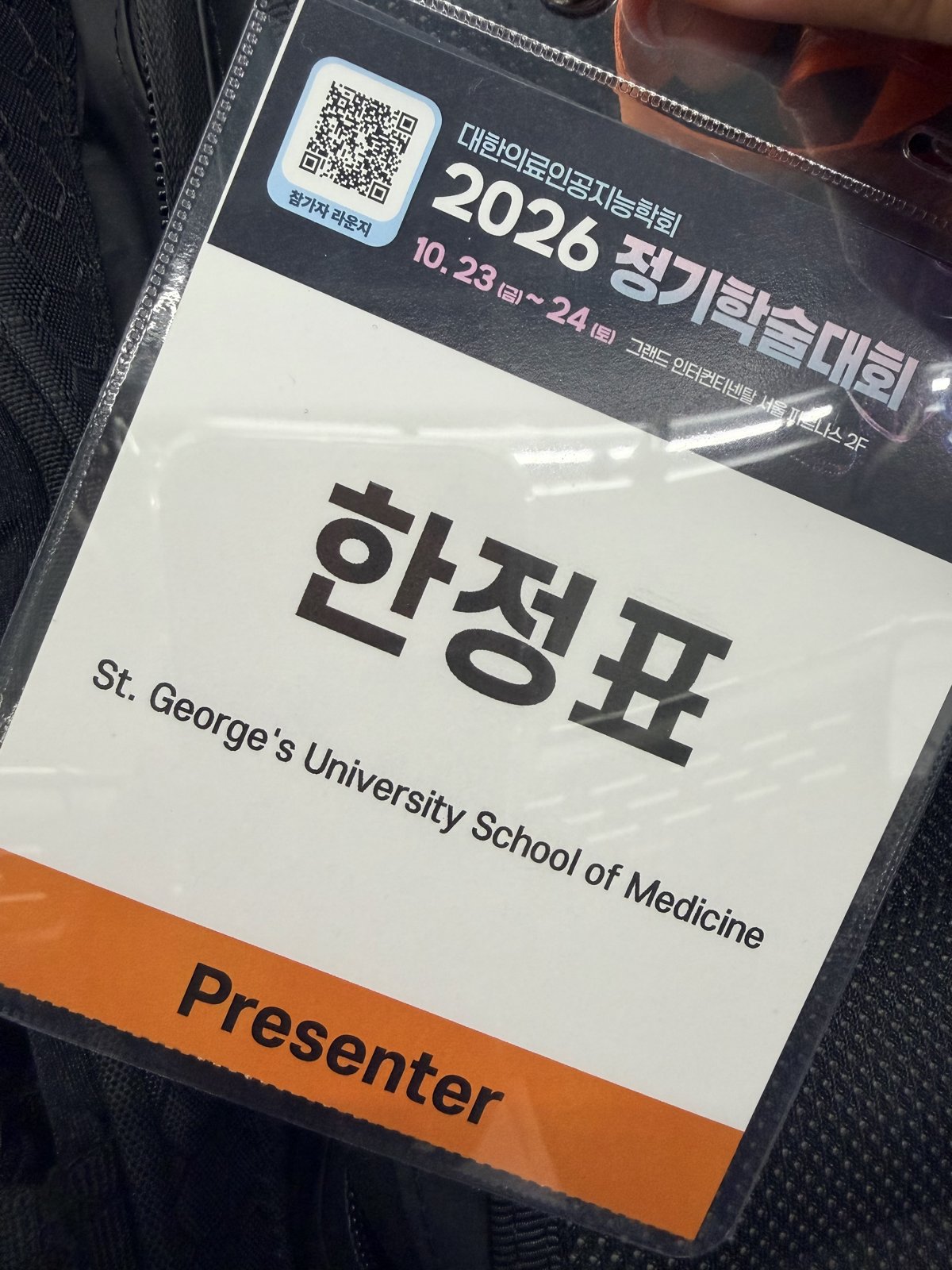
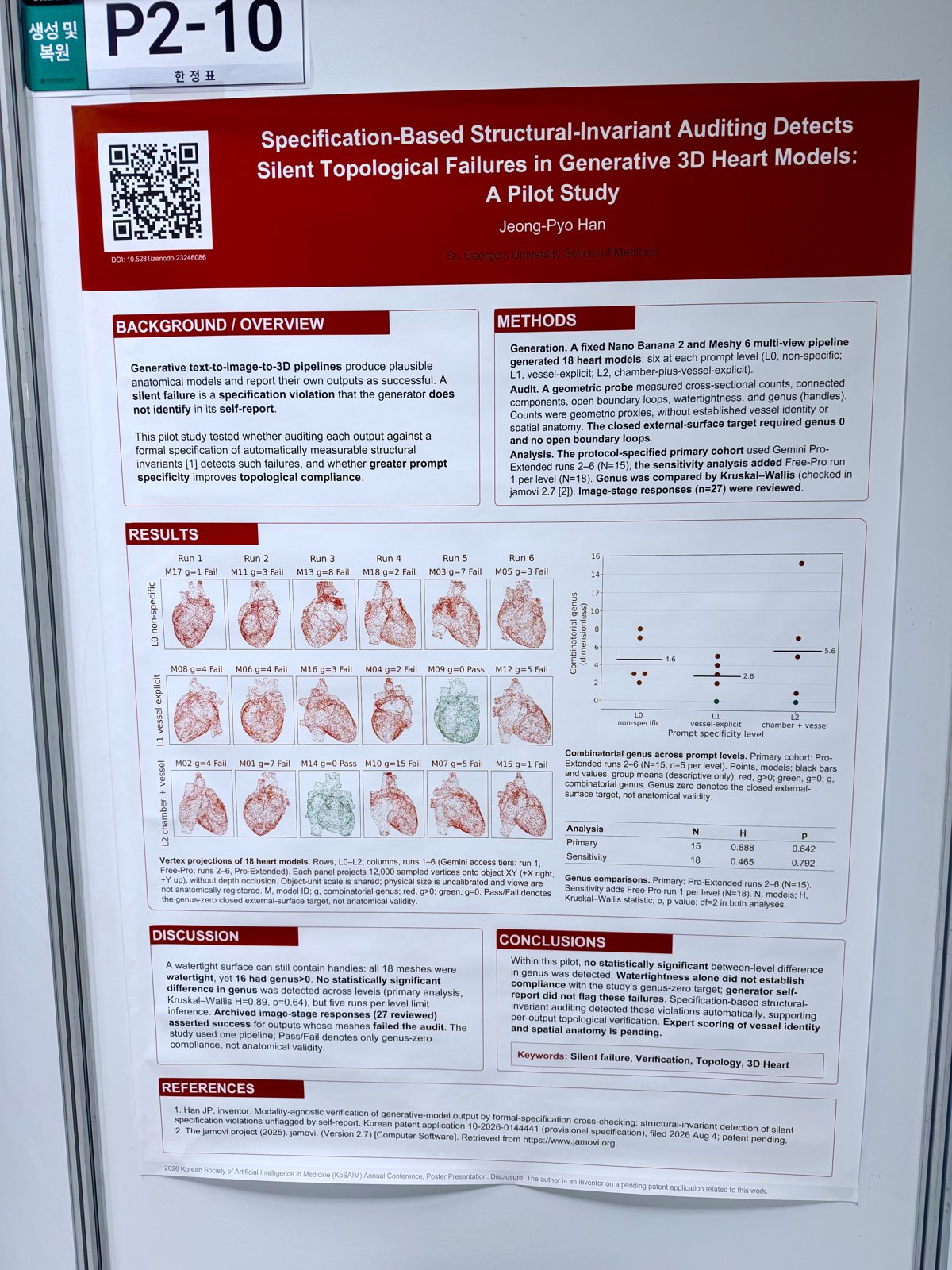
23 October 2026
The opening ceremony was at 9:45. Lectures ran until the 16:10 break and the poster session started at 16:30. Two cans of energy drink got me through the morning and coffee got me through lunch. Around 3 p.m. the body started to give out and my face went red.
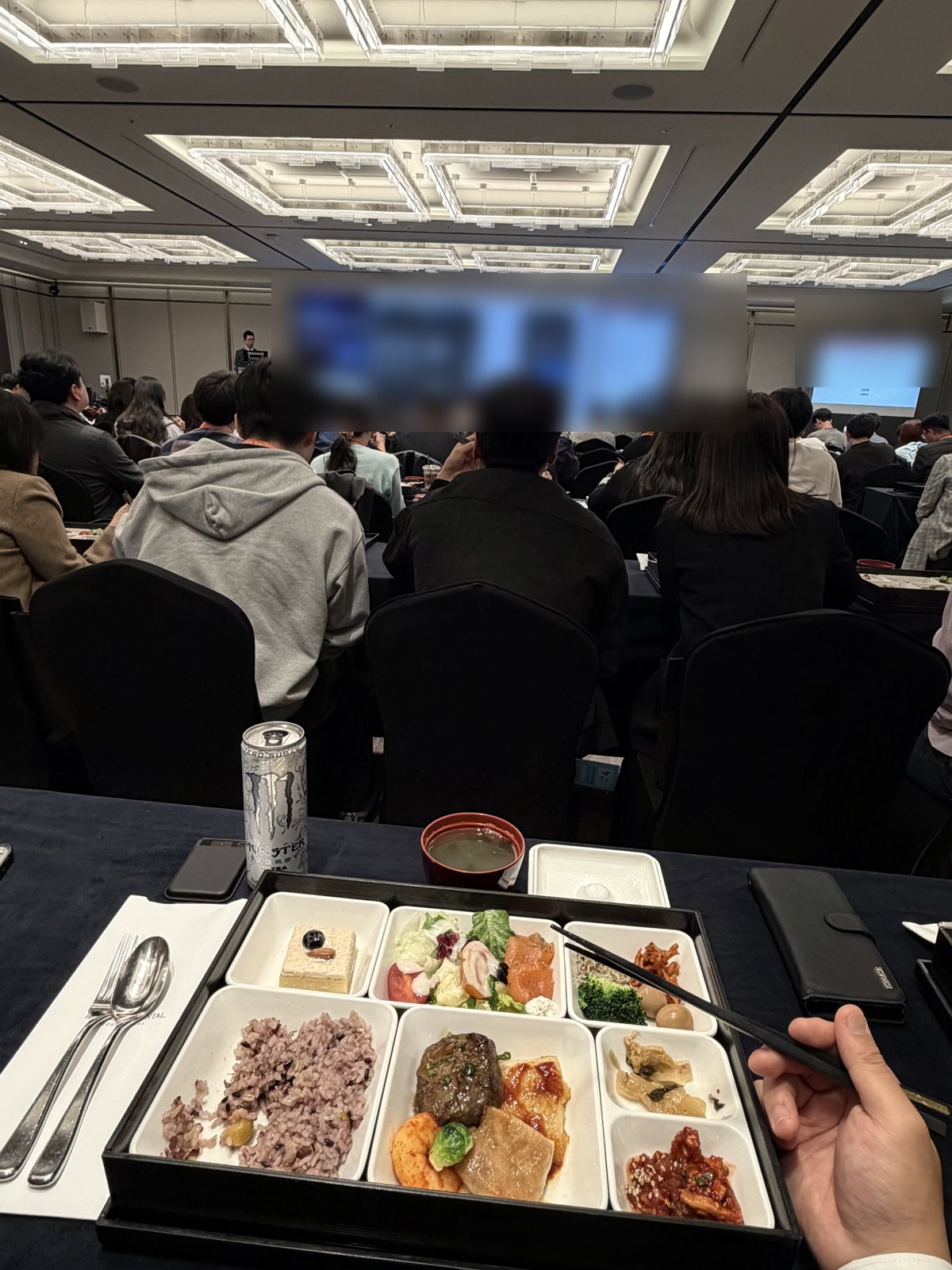
During a break I stopped at a booth and was shown a chest radiograph with an abnormality score in the high nineties. I asked what in the image produced the number, and the person at the booth could not say; the score comes out of the training data. I wrote in my notes that it looked like pattern recognition over a large set, that the gap between clinician and engineer is still there, and that we do not know why the model reached its conclusion.
That evening I wrote the following in English, in one sitting. It is reproduced as written, with the spelling fixed, one trim in the first item, and one time corrected in brackets in the second.
KoSAIM Conference 2026 Day 1. De-briefing:
1. Honestly, this feels like a place where all the knowledge and new information on artificial intelligence, straight up tips and tricks, [is] WAYYYYY better than me researching x amount of hours trying to get contents online. Top notch info.
2. Landed at 9pm the night before the conference after 48hrs of travel (2 delays), poster display by 9am with full day of lecture presentations led by the current labs + [4:30]pm poster presentation. Had 2 monsters and 2 cups of coffee, still didn't wake me up fully. I'm still dead.
3. So many folks had support, labs, companies, and their colleges. Mostly straight up biotech engineers, focusing on performance improvement and new model release as well as application in Medicine. Was kinda jealous. I had none. There is up and downs to this, and today I felt that through my core - total freedom, but less resources. I was jealous of the latter today.
4. First time in my adult life professionally presenting in Korean. I was so nervous not gonna lie. But I think my message has conveyed well. No regrets (well beside lack of sleep). Was able to pull out "Ooo" reaction from one of the graders. And I think she enjoyed the presentation and understood my method precisely - her question was, is it possible to change the specification or is the audit pipeline fixed? She understood it correctly, for sure.
5. Judging by the participants, I thought no one was going to stop by. This was partially true since most folks are big data/biotech engineers. I conducted my project from a hybrid - medical students' perspective and from anatomical point of view + engineering, rather than just straight pure up engineering. Thankfully, I encountered a handful of people stopping by mine, even saw one person taking a picture and leaving! I was so exhausted to interact so I just stood by and observed.
That's Day 1, KoSAIM 2026. One hell of an experience. So grateful for the opportunity.
The question in item 4 is the one I will keep. The specification is the set of conditions the user sets for each target, and it can change from one target to the next. The audit probe is fixed and sits outside the generator.
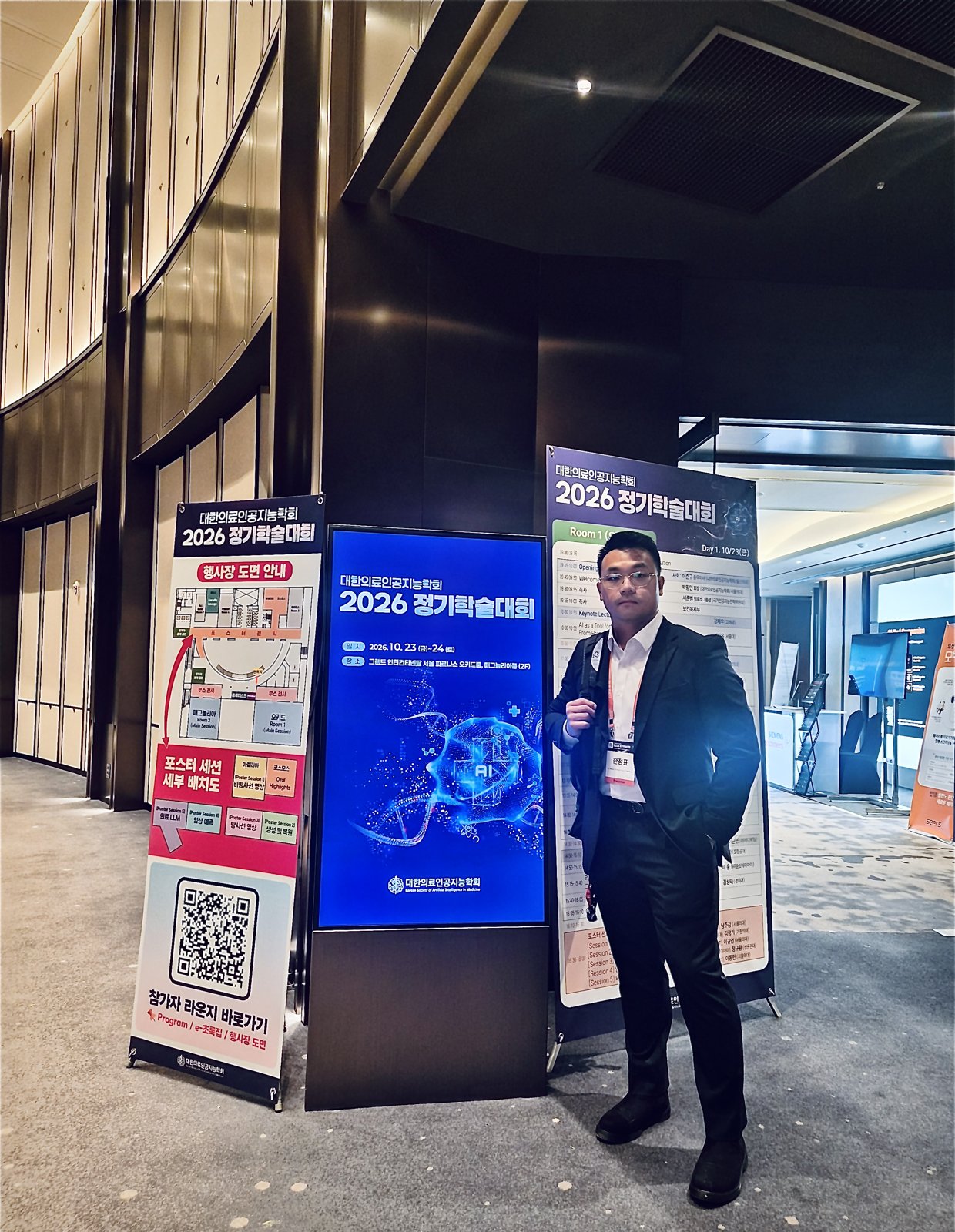
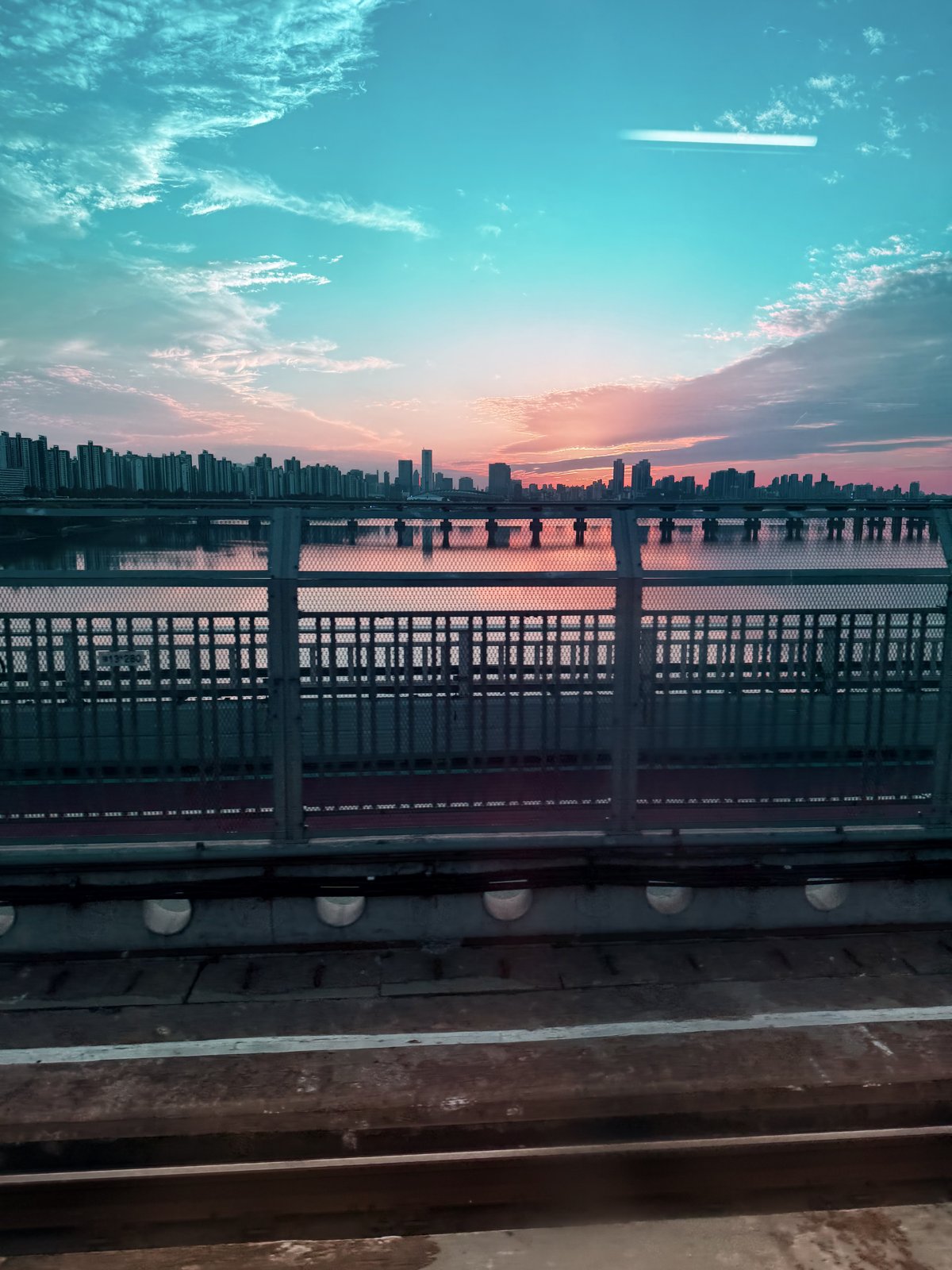
24 October 2026
Day 2 was platforms. Hospital data platforms, the layers between a record system and a model, agents that draft documentation, and a panel on which models a hospital should run and who pays for the GPUs. Most of it was about data, where it lives, how it moves between institutions, and who is allowed to touch it. I wrote one line during the panel, in Korean, and it still holds a day later. The translation follows.
The data is all connected. The question is who gets the GPU.
That is what I heard in the rooms I sat in over two days, as one attendee with one poster, and it is no survey of the field. The questions I had brought with me were not the ones being asked in those rooms, and I will come back to that in later notes.
What changed
This was my second KoSAIM; the first was the summer meeting in July. I came to this one with three more months of work to hang the talks on, and more of it stuck. Several running projects moved in the room, and a few that had been stuck against a wall for weeks came loose there too.
One thing went deep. Medical AI is a field under construction. Infrastructure and regulation are not settled, and I learned that in concrete terms over the two days. At the same time the engineers in the room, biomedical and AI, ship constantly. To me it feels as if the board changes every two or three days, and a tool that was good last month can be obsolete before it is finished. For about seven months I have studied medicine by day and run experiments, built, and read by night, carrying the worry that if I put the tools down to study, the field would move past the point where I could catch up. The two days settled that worry. My primary weapon is medicine. The tools are secondary weapons. I cannot outbuild full-time engineers and I do not have their resources, and in this field medicine is the primary focus. The conference confirmed that once more.
I attended with no affiliation, as a medical student building an early career, with no hospital and no medical AI company behind me. That position let me listen to both sides without leaning toward either, to what the companies doing medical AI transformation are up against and to what the hospitals are up against. I will unpack the detail over time, in publications and in products. One thing I want on the record now is that I found the place where someone with no affiliation and my particular skills can work, and that it is not crowded. If I borrow a business term, it looks like a beachhead.
What did not change
Not much changed. The list of things to do got longer. The poster says what it said on 23 October. Sixteen of 18 meshes failed the genus-zero target, the between-level difference was not statistically significant, and expert scoring of vessel identity and spatial anatomy is pending. Nothing I heard in Seoul moves those numbers. The order of work is the same as in Note 001. The lab is still one person with no affiliation, and after these two days I count that as a position.
Pending
Expert scoring of the 18 meshes for vessel identity and spatial anatomy. The second study, pre-registered on OSF under embargo; generation is done and the audit runs next. Clinician adjudication of a sealed sample of 40 ICU handoff notes. Coding of the 27 image-stage responses for the full paper. The harness manuscript. The formal patent specification.
That is the list as it stands today. More came back from Seoul than fits on it, and I plan to work through it one item at a time.
Everything public from this lab carries a DOI or a hash. This note carries dates.
References
- Han JP. Specification-Based Structural-Invariant Auditing Detects Silent Topological Failures in Generative 3D Heart Models: A Pilot Study. Poster, 2026 Korean Society of Artificial Intelligence in Medicine (KoSAIM) Annual Conference, Seoul, 23 to 24 October 2026. Zenodo. https://doi.org/10.5281/zenodo.23246086
- Note 001, Silent failure, dated. Written 18 October 2026. https://www.thebioarchitectonic.com/notes/001-silent-failure-dated.html
Disclosure. The author is an inventor on a pending patent application related to the poster in reference 1.